India’s Strategic Balancing Act in the Strait of Hormuz Crisis
In a time of rising geopolitical tensions and global energy uncertainty, India has once again demonstrated the power of strategic diplomacy, operational readiness, and economic foresight.
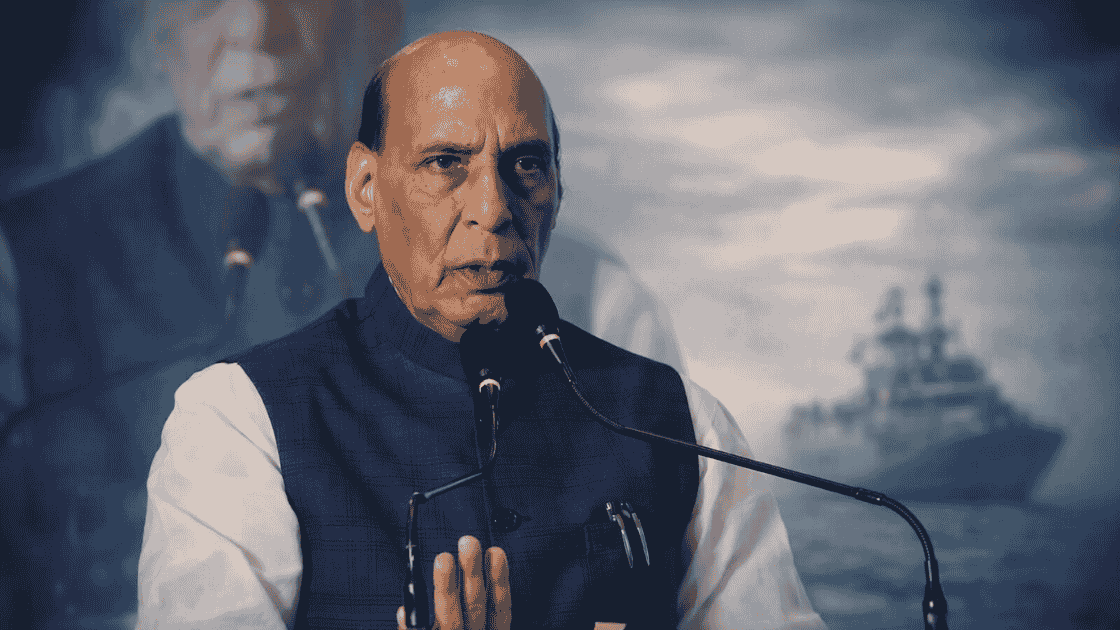
Speaking at a ceremonial event in Uttar Pradesh, Defence Minister Rajnath Singh highlighted a critical reality—India today has more ships passing through the Strait of Hormuz than any other nation. This is not just a statistic; it is a reflection of India’s growing energy demand, maritime footprint, and global economic positioning.
The Strait That Powers the World
The Strait of Hormuz remains one of the most critical energy chokepoints in the world. Nearly 20% of global oil trade passes through this narrow stretch. Any disruption here sends shockwaves across global markets.
Following a late-March military escalation involving the United States and Israel against Iran, the Strait was effectively closed to most international shipping. This triggered volatility in oil prices, supply chain fears, and energy insecurity across Europe and Asia.
Yet, in a remarkable diplomatic outcome, India emerged as a rare exception.
Diplomacy at Its Finest: India’s Unique Position
India’s long-standing and carefully balanced relationships with both the United States and Iran played a decisive role. Prime Minister Narendra Modi engaged in dialogue with Iranian President Masoud Pezeshkian to ensure continuity of critical energy supplies.
Iran’s Ambassador to India, Mohammad Fathali, confirmed that Indian vessels were granted safe passage, even as most global traffic remained restricted.
This “dual-track diplomacy” ensured that while global fuel prices surged, India maintained relative stability, shielding its economy and citizens from immediate shocks.
Operation Urja Suraksha: Safeguarding India’s Energy Lifeline
Recognizing the gravity of the situation, the Indian Navy launched Operation Urja Suraksha in March 2026.
The mission:
To secure and escort critical energy shipments through the volatile Strait.
- 22 vessels were deployed, with 20 classified as high-priority
- Cargo included LNG, LPG, and crude oil
- Focus: uninterrupted supply to India’s refineries and households
On March 30, two LPG carriers—BW TYR and BW ELM—successfully navigated the Strait under naval protection, carrying nearly 94,000 tonnes of fuel.
Their destinations:
- Mumbai
- New Mangalore
By April 1, the operation had already ensured the safe passage of multiple vessels, reinforcing India’s maritime strength and preparedness.
Domestic Impact: Managing Energy for 1.4 Billion People
At home, the situation was equally sensitive.
India serves over 333 million households with LPG connections. With imports under pressure, the government moved swiftly:
- Refineries were instructed to maximize LPG production
- Households with piped natural gas (PNG) were temporarily restricted from purchasing LPG cylinders
- Emergency measures ensured equitable distribution, prioritizing vulnerable households
Despite global disruptions, Rajnath Singh reassured that India faced no immediate shortages, a testament to coordinated governance and crisis management.
A Reflection of India’s Rising Global Standing
Beyond the immediate crisis, this episode underscores a larger shift.
India is now among the top four economies globally, with a growing influence in both geopolitics and global trade. Initiatives like Atmanirbhar Bharat have further strengthened the country’s ability to respond to crises—not just as a consumer, but increasingly as a producer and strategic power.
From defense manufacturing to energy security, India is transitioning from dependency to resilience and leadership.
Conclusion: More Than Just Energy Security
The Strait of Hormuz crisis is not just about oil—it is about strategy, relationships, and national capability.
India’s ability to:
- Maintain diplomatic balance
- Execute military precision
- Manage domestic demand
- Stabilize economic impact
…positions it as a mature global power navigating uncertainty with confidence.
In a world defined by disruptions, India’s approach offers a clear lesson:
Strength lies not just in power—but in balance.
Disclaimer
The information provided is for general informational purposes only. While every effort has been made to ensure accuracy, no guarantees are made regarding completeness or reliability. Any reliance placed on this information is strictly at your own risk.